
Learn from the Testing Experts
11th March, 2026
DENVER
Keynote Speaker

Operationalizing AI – The AI-Enabled Team
Melissa is a Quality Engineering leader with experience in technology operations and a deep focus on AI enablement. A longtime contributor to the technology community through speaking and writing, Melissa focuses on practical approaches to quality strategy, emerging technology adoption, and building collaborative frameworks that help teams deliver efficiently in rapidly changing environments.
Takeaways from this talk
- Operationalizing AI requires more than technical aptitude; it’s about centralizing, scaling, and integrating AI across the whole organization, starting with good roadmapping and support systems.
- The most successful teams blend focused R&D (“lab”) with broad enablement and engagement (“crowd”)—you need buy-in and participation beyond isolated pilots.
- Real momentum comes from intentionally building capacity, nurturing innovation, and sharing responsibility so that AI becomes part of everyday work, not just a side project—especially when starting with a small or single-person team.
- These practical insights equip leaders, engineers, and testers to systematically build and scale AI capabilities, avoiding common pitfalls and ensuring lasting organizational impact.
Featured Speakers

Shift-Left Automation for AI-Era DevOps: Faster Feedback, Smarter Tests
Modern software teams are under pressure to deliver secure, reliable features at unprecedented speed. Traditional testing approaches that happen late in the pipeline can no longer keep up. This session explores how shifting testing earlier powered by automation and AI-driven tooling can accelerate delivery, reduce defects, and improve developer experience. We’ll break down practical strategies for embedding testing into design, development, and CI/CD workflows, and highlight how intelligent test generation, predictive defect analysis, and self-healing tests are transforming DevOps. Attendees will learn frameworks, cultural changes, and team practices required to adopt shift-left testing across cloud-native, containerized, and distributed systems.
Takeaways from this talk
- Quality must start early not at the end
- Testing becomes a shared responsibility
- Automation is the foundation
- AI supercharges test effectiveness
- Shift-left is a journey, not a one-time adoption

Human-in-the-Loop AI for Test Automation: Building Trust, Sustainability, and Quality at Scale
As AI becomes embedded in test automation tools, many teams struggle to balance speed with trust, maintainability, and human accountability. This session focuses on how QA and engineering teams can apply AI in test automation without over-automating decisions or creating brittle, opaque test systems.
Based on real-world experience, the talk walks through practical, human-in-the-loop workflows for AI-assisted test design, API automation, failure triage, and test maintenance within modern CI/CD pipelines. Rather than promoting fully autonomous or self-healing testing, the session emphasizes clear guardrails, review points, and decision boundaries that keep humans responsible for quality outcomes.
Attendees will leave with concrete implementation patterns, checklists, and adoption strategies they can apply immediately to build sustainable, trustworthy, and AI-assisted test automation in real delivery environments.
Takeaways from this talk
How to apply AI in test automation while keeping human judgment and accountability
- Practical human-in-the-loop workflows for AI-assisted test design and maintenance
- Guardrails that prevent brittle, untrusted, or noisy AI-generated tests
- Techniques to reduce flaky automation and speed up failure triage using AI insights
- A responsible adoption model teams can implement without disrupting existing pipelines

When AI Writes the Code, Who Checks the Thinking?
AI is transforming how software gets built. Code that used to take weeks now ships in hours. Test suites can be generated and executed automatically. Anyone, not just engineers, can produce functional software. On the surface, this looks like a quality revolution. But beneath the speed and convenience, something important is breaking.
AI-generated tests can hit 90% coverage and still catch zero intent failures. Requirements that used to get a second look from QA now flow straight into production, unquestioned. And when things go wrong, nobody fully understands the codebase because no human reasoned through the decisions.
Drawing from experience leading engineering teams at Google and Roblox and building AI-powered products as a founder, this talk confronts an uncomfortable truth: the hardest quality problems were never about the code. They were about alignment, critical thinking, and human judgment. AI is stripping away the mechanical work and exposing those gaps faster than ever.
This isn’t a talk about testing tools or frameworks. It’s a talk about what quality engineering needs to become when AI handles the easy parts, and why the answer has more to do with domain expertise and business understanding than writing better scripts.
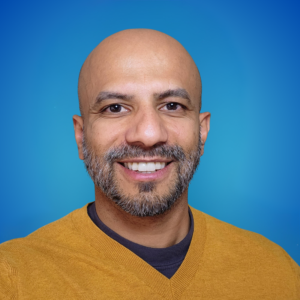
AI-Driven Testing When Agents control Requirements: Generation, Self-Healing
Writing tests is slow. Maintaining them is slower. And when requirements change mid-sprint — a promo code field added here, a cart validation rule changed there — your existing test suite can go from comprehensive to incomplete overnight.
Most QA teams manage that reality manually: someone spots the change, figures out what’s affected, updates the test cases, and hopes nothing slips through. That process is slow, error-prone, and doesn’t scale. AI-driven requirements management is changing how teams respond to that reality, and this session shows you exactly how.
In this talk, we cut through the hype and get practical. Using LLMs against a real ecommerce storefront, you’ll watch AI build a versioned source of truth that links requirements to acceptance criteria to test cases — then use that foundation to detect requirement changes, assess regression impact, and flag coverage gaps before a single test runs.
We’ll look at what the AI gets right, what it misses, and what that tells us about where human judgment stays essential. Whether you own test strategy or manage a team, you’ll leave with a clear picture of what AI-assisted requirements traceability looks like in practice — and a realistic view of where it’s ready to use today.
Takeaways from this talk
- A practical framework for designing LLM context that produces reliable, structured outputs for requirements and test case management — understanding what makes a prompt effective versus what produces hallucinated or inconsistent results
- An understanding of how to build a versioned source of truth aligned with Agile standards (Application Version → Themes → Epics → Stories → Acceptance Criteria → Test Scenarios → Test Cases) that serves as the foundation for all downstream AI-assisted workflows
- A working model for complete traceability from features and stories through test scenarios (happy path, negative, edge cases) down to Gherkin-structured test cases — and how LLMs can maintain these relationships as requirements evolve
- A concrete model for using AI to analyze requirements changes and identify which existing tests are affected, which acceptance criteria are no longer complete, and what new coverage is required — before CI runs
- Strategies for handling ambiguous changes — using LLMs to distinguish bugs from undocumented requirements, classify observed behavior against documented acceptance criteria, and surface the right questions for human decision-makers
- An honest assessment of current limitations including missed context dependencies, false confidence in impact assessments, over-reliance on pattern matching, and where human oversight remains non-negotiable
Tutorial Speaker

Workshop_ Architecting Trust — Defensive QA for Non-Deterministic AI Systems.
As AI agents and LLMs make code generation widely accessible, the SDET role is shifting from how much we automate to how much we can trust AI output. Because AI optimizes for plausibility—not certainty—it introduces new quality risks.
In this hands-on workshop, test automation is reframed as Strategic Reliability Auditing. Participants will build a Guardian Layer that validates, constrains, and stabilizes AI output before it reaches production.
What You Will Learn
- Auditor Pattern – Detect hallucinations by reconciling AI output with authoritative engineering truth.
- Consistency Stress Testing – Use metamorphic testing to expose fragile reasoning under small input changes.
- Deterministic Guardrails – Implement Python-based logic to intercept and correct AI failures in real time.
- Strategic Risk Mapping – Translate audit signals into a Quality Risk Heatmap for AI adoption.
Takeaways from this talk
- From Scripting to Auditing – Why modern QA focuses on measuring and managing model stability.
- Defensive-by-Design AI – Patterns for resilient, self-healing AI output pipelines.
- Quantified Trust – Replace opinion with measurable trust scores and stability metrics.
Fireside Chat Speakers
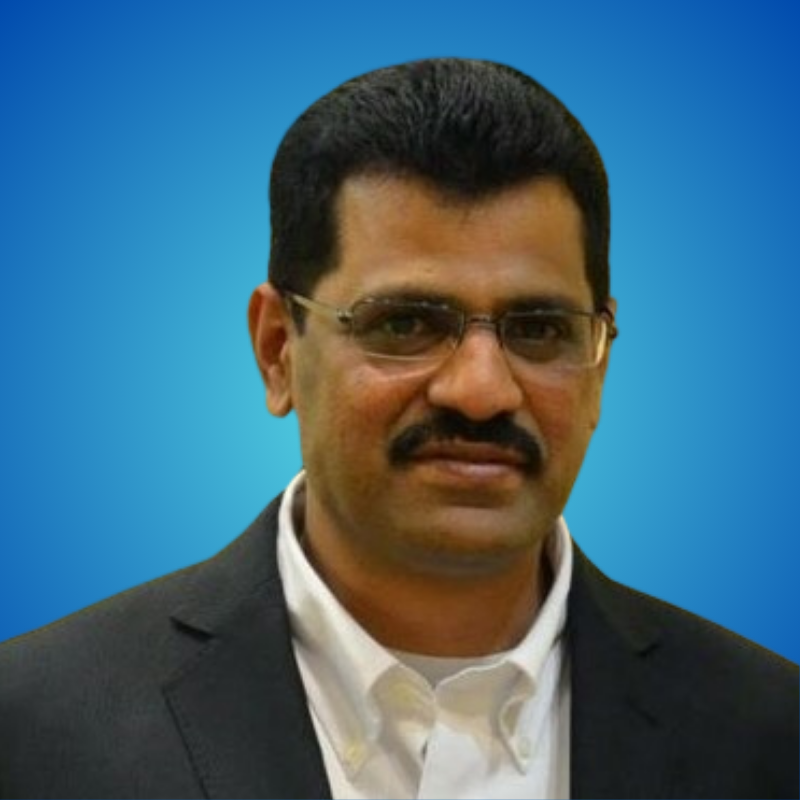
Ravi Amarala
Ravi Amarala is a seasoned Software Quality Assurance and Test Automation leader with over 16+ years of experience driving quality excellence across complex enterprise environments.
He brings a strong combination of technical depth, strategic thinking, and people leadership—consistently delivering high-impact quality engineering outcomes aligned with business objectives. Ravi has demonstrated exceptional leadership capabilities, driving transformation initiatives, fostering accountability, and enabling organizations to elevate their quality maturity.
A proven senior leader, Ravi has successfully built and scaled high-performing, multi-cultural teams across global geographies. He is known for cultivating collaborative environments that promote ownership, innovation, and measurable delivery excellence.
Adaptable and forward-looking, Ravi thrives in dynamic business and technology landscapes. His ability to embrace emerging technologies and operate effectively in challenging environments has helped organizations navigate change while maintaining a sharp focus on quality, speed, and efficiency.

Panel Discussion Speakers

Jessica Strock
With a career that started in software quality assurance, I’ve spent years leading global teams, refining QA strategies, and ensuring the delivery of high-performing digital experiences across complex products. My background spans hands-on testing, QA leadership, and client-facing delivery, giving me a deep appreciation for both the technical and human sides of software development. Now, as Director of Strategic Development at Testlio, I focus on building meaningful partnerships and aligning quality-driven insights with broader business goals, helping organizations scale confidently and deliver exceptional quality.

Bhavana Karwar Naik
Visionary and results-driven, offering 15+ years of software test engineering, QA, and system engineering leadership experience. Versatile Senior Development Manager with expertise in managing test automation, DevOps, and Dev Engineering teams of up to 38 staff while enforcing standards/processes to automate the deployment of software products. Progressive and innovative, highly valued for interpreting IT vision and strategy, translating objectives into actionable plans, and providing decisive leadership to multi-functional technical and engineering staff. Articulate and organized with exceptional communication and management skills, able to effectively relate to everyone on any level. Revered by superiors, peers, and clientele for being highly collaborative and interpersonal.

David Worth
I am an experienced Engineering Leader with deep expertise in reliability, observability, and infrastructure across startups and enterprise environments.
As the VP of Engineering at Defense Unicorns, I brings nearly two decades of experience building scalable systems and high-performing teams. My background spans building cloud providers, security, and data products having held senior roles at Statype, SS&C, Strava, DigitalOcean, FireEye, and more.
My goal is to always align engineering strategy with mission-driven outcomes.

Shiva Prasad BV
Siva Prasad BV is an accomplished leader with strong expertise in Project Management, Program Management, and Client Relationship Management, delivering consistent business value across complex engagements.
He combines strategic oversight with operational excellence, bringing a solid foundation in financial management alongside deep technical understanding. His ability to align delivery execution with financial discipline ensures projects are completed efficiently, profitably, and with measurable impact
